Followers

Showing posts with label Pet Safety Tips. Show all posts

Tuesday, July 16, 2019

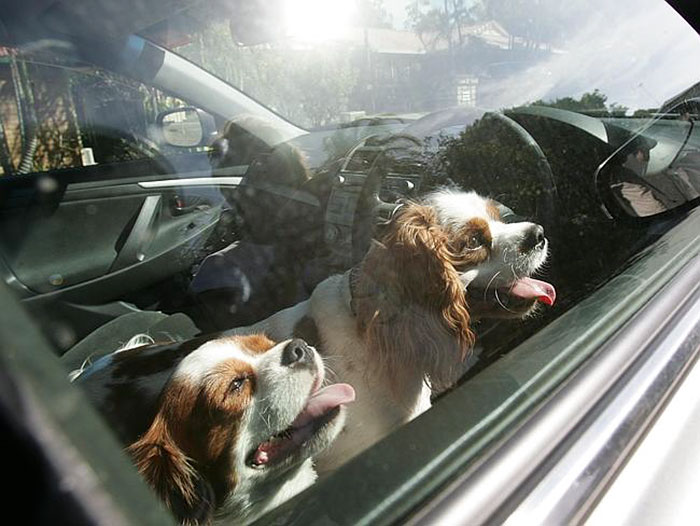
What You Should Do if You Find a Dog in a Hot Car


We’ve all seen it: a dog pressed against the window of a car in the sun. If you wait for a few minutes by the car and the owner doesn’t return there are steps you should take immediately. Taking these actions could save a life!
  1. Quickly scan the parking lot for the pet’s owner. Ask nearby folks if the car is theirs.
  2. Write down the car’s make, model and license plate number.
  3. Dash into any local businesses and ask managers or security guards if they can alert customers to the situation.
  4. If you can’t find the pet’s owner, dial the non-emergency number for the local police or animal control.
  5. Stay next to the car until the proper authorities arrive on the scene.
  6. If, and only if, your area has special laws that allow it, you may break into the vehicle to save the animal’s life. This is only an option if you have already called law enforcement!
Be sure to know when to get involved by reading this article but never ever be afraid to intervene because dogs cannot speak for themselves!  

Please pass this post along to anyone who could use this reminder! Thank you!

Monday, July 15, 2019

Heat Safety for Dogs in Cars


It starts off innocently with the pet parent fully convinced that he'll only be in the store for 5 minutes (and even that is too long to leave a dog in a heated car) but something almost always inevitably happens (he can't find the item he's looking for, long lines, a chance encounter with a neighbor in the aisle, etc) and suddenly Fido is waiting in the car for thirty minutes or more! By then the dog's health and well being is at risk so the best thing to do is to leave your dog at home while you run errands!

I can't post this friendly warning enough so please pass this along to anyone who might need a reminder! Thank you! 

Monday, January 28, 2019

3 Reasons Why Proper Nail Length is Vital to Your Dog's Health


I think we all know that nail trimming is important for the prevention of scratches on our furniture, carpet, and floors but did you know that proper nail length is an important factor in our dog's health and safety? 

The 3 reasons to keep nails at the proper length are as follows: 

1) Helps in our dog's ability to comfortably jump and make sharp turns on agility courses or while playing in the backyard. 

2) Prevents painful feet: When nails are long, the hard surface pushes the nail back up into the nail bed which puts pressure on all the toe joints or forces the toe to twist to the side.

3) To help geriatric dogs long term health to improve and/or be stabilized by their ability to distribute their weight correctly and not have a slumped back. In other words, if a dog's back nails are too long he will compensate by putting all of their weight in their front paws where their nails are at the correct length. 

Dr Leslie Woodcock, a Team Canada veterinarian and owner of Woodcock Veterinary Services, a clinic that specializes in rehabilitation for dogs post surgery or post injury posted an excellent 14 minute informational lecture explaining why healthy nail length is  important. 

Dr. Leslie suggests that our goal should be to cut our dog’s nails short enough that you CANNOT hear them on your tile floor. In order to get the nails this short without hurting the dog (or making their nails bleed) your goal should be to get the “quick” (or soft bit that supplies blood to the nail) to recede.

Most people when cutting nails try to cut directly across the dog’s nail (as in the diagram below):


However, Dr. Leslie recommends the best way to cut your dog’s nails without hurting them AND get that quick to recede is to cut the sides of the nails on an angle.

By cutting nails this way it becomes easier to get your dog’s nails shorter without hurting them. 


Take a look at these before and after pictures of nearly 17 year old Buzz above. On the left is Buzz before a nail trim and on the right is him after his trim. To the right he is distributing his weight correctly and comfortably. You can tell this because his posture in his front and back legs are uniform (all four legs are straight and erect).

Dr. Leslie’s information is a real eye-opener and I hope it will be used as a point of reference when your dog needs a trim in the future!

Saturday, January 19, 2019

How to Prepare You and Your Dog For the Snowpocalypse


 If you are gearing up for a major snowstorm which is forecasted to start tonight you are out getting the essentials but are you ready for the way the snow is going to effect your dog? 

I know my dog, Daisy, isn't a fan of deep snow and only wants to go out long enough to relieve herself and then head back indoors to safety and warmth but what if your dog wants to be out a little longer than 5 minutes? 


Here are a few basic necessities of snowstorm gear for dogs:
  • Water-resistant coat to protect from cold and wet
  • Booties or paw protectors
  • Dog goggles to protect sensitive eyes from sun glare off snow

In addition to preparing your dog to go outside, you can prepare the outside for your dog:
  • Shovel steps and walkways, and use a pet-safe de-icer.
  • Clear a patch of grass for your dog to potty in (you may need to keep clearing as the snow continues to fall!)
  • If your pet is sensitive to snowfall, construct a temporary shelter over a section of the yard. Even a sheet of plywood leaning against the shed can offer enough space for your dog to do her business and keep a dry head.
 Here's what to do if your dog is brave enough to fight the elements:

Before the walk:
  • Bundle up if necessary. You and your dog should be protected from the elements.
  • Secure the leash! If you slip and fall, you don’t want to lose track of your dog. Consider using a hands-free jogger’s leash as back-up to your regular leash.
  • Clip on a collar light for your dog, and headlamp for yourself, to stay visible while the snow falls
During the walk:
  • Avoid frozen-over puddles and ponds. As much as possible, stick to cleared sidewalks, packed snow, or parks and fields where you know the terrain.
  • If it’s actively snowing, periodically brush snow from your dog’s face and coat.
  • Carry a rag to clear snow, salt, and sand from between your dog’s toes.
After the walk:
  • Use a damp rag to wipe down your dog’s feet, legs, and tummy. This will remove hitchhiking snow and ice, as well salt and chemical de-icers popularly used during snowstorms.
  • Dry off your dog completely.
  • Cuddle up under a blanket fresh out of the dryer for extra post-walk warming!
 With some cold-weather preparation and a positive outlook, you and your dog can make the most of the snowpocalypse. Spring will be here before you know it, but for now, enjoy the snow with your best friend!

Monday, January 14, 2019

Keep Your Dog's Paws Comfortable This Winter in Muttluks Booties!


If your dog's paws are sensitive to the ice melt, ice, and snow there is a solution! When a client asked me what she should do to keep her dog's paws safe in the winter weather I immediately recommended Muttluks booties because 


I'd read about a little schnauzer named Atticus who climbed 48 mountain peaks with the help of these comfortable booties (pictured) alongside his best friend, Tom Ryan, who penned their travels in  Following Atticus. I figured that since these booties kept Atticus comfortable while hiking many miles in the most frigid temperatures they surely could keep any dog's paws warm and safe during walks in town!

If your dog is losing out on long walks on the snow and ice please consider buying these boots! Your dog will be pawticularly happy to wear them! 

Want to learn more about Atticus? Click here to head over to his Facebook page!

Saturday, January 5, 2019

Gifted With Rawhide This Christmas? Here's What To Do With It!


Did you know that producing rawhide begins with the splitting of an animal hide from cattle? The top grain is generally tanned and made into leather products, while the inner portion, in its “raw” state, goes to the dogs! Removing the hair from hides often involves a highly toxic recipe: sodium sulphide liming.
In the post-tannery stage, hides are washed and whitened using a solution of HYDROGEN PEROXIDE and BLEACH. And that’s just one step.
Other poisonous residues that may show up in rawhide include ARSENIC and FORMALDEHYDE — Even dog skin is a possibility.
Say “thanks!” and toss it in the trash. Your dogs will look sad, but they don’t know the risk!

Tuesday, August 14, 2018

Why Proper Nail Trimming Is Vital to Your Dog's Health


I think we all know that nail trimming is important for the prevention of scratches on our furniture, carpet, and floors but did you know that proper nail length is an important factor in our dog's health and safety? 

The 3 reasons to keep nails at the proper length are as follows: 

1) Helps in our dog's ability to comfortably jump and make sharp turns on agility courses or while playing in the backyard. 

2) Prevents painful feet: When nails are long, the hard surface pushes the nail back up into the nail bed which puts pressure on all the toe joints or forces the toe to twist to the side.

3) To help geriatric dogs long term health to improve and/or be stabilized by their ability to distribute their weight correctly and not have a slumped back. In other words, if a dog's back nails are too long he will compensate by putting all of their weight in their front paws where their nails are at the correct length. 

Dr Leslie Woodcock, a Team Canada veterinarian and owner of Woodcock Veterinary Services, a clinic that specializes in rehabilitation for dogs post surgery or post injury posted an excellent 14 minute informational lecture explaining why healthy nail length is  important. 

Dr. Leslie suggests that our goal should be to cut our dog’s nails short enough that you CANNOT hear them on your tile floor. In order to get the nails this short without hurting the dog (or making their nails bleed) your goal should be to get the “quick” (or soft bit that supplies blood to the nail) to recede.

Most people when cutting nails try to cut directly across the dog’s nail (as in the diagram below):


However, Dr. Leslie recommends the best way to cut your dog’s nails without hurting them AND get that quick to recede is to cut the sides of the nails on an angle.

By cutting nails this way it becomes easier to get your dog’s nails shorter without hurting them. 


Take a look at these before and after pictures of nearly 17 year old Buzz above. On the left is Buzz before a nail trim and on the right is him after his trim. To the right he is distributing his weight correctly and comfortably. You can tell this because his posture in his front and back legs are uniform (all four legs are straight and erect).

Dr. Leslie’s information is a real eye-opener and I hope it will be used as a point of reference when your dog needs a trim in the future!

Friday, August 10, 2018

Car Safety Precautions to Bear in Mind In the Summer Heat


For the past few days four-legged residents of Dover, New Hampshire, have been enjoying the 80-90 weather by taking joy rides which is fun to watch because nothing is cuter than seeing dogs' ears flapping in the wind but what worries me is when dogs are left alone in a heated car while owners run into a store to get a few errands done. As noted in the above picture, there is a huge difference between outdoor and indoor temperatures!


Last year the above picture circulated around the internet praising the owner as the "most responsible pet owner ever" but when I read it I shuddered because the owner was obviously misinformed about the dangers of overheated cars! As noted in the diagram above, temperatures rise significantly even if the air conditioner is running or the windows are slightly open!


I agree that it is tempting to get those errands done while your dog waits for you in the car but those minutes could easily turn into an hour or even longer if the line at the cash register is too long or if you get distracted by a chance encounter with an old friend so the best advice I can give you is if it's too hot for a human being to be in the car then it is too hot for your dog.


But what if you happen to see a dog who is suffering in a heated car for too long? My advice is to immediately alert the store's customer service so they can alert the owner to go to their car quickly.

After you've gone into the store to help locate the owner and there's no response the next step is to call 9-11. If you sense the dog is in immediate danger breaking the car window is recommended but be sure check if it is legal to do so. If you think you are being too nosy or too much of an alarmist, think again! New Hampshire is one of 19 states that prohibits leaving animals in a confined vehicle so don't feel guilty about taking quick action!
 
Please pass this post along so that these unprotected dogs can remain safe during hot weather! Thank you! 

Thursday, August 9, 2018

7 Ways to Keep Your Cat Cool This Summer


Have you noticed that your cat has been grooming himself more frequently this summer than he or she does during the cooler months? This is because adding moisture to his fur naturally cools him down but there are seven other things you could do to make him feel even more comfortable:

1) Buy a Fan

Get a small box fan and set it on the floor near your air conditioner or an open window. For extra cooling power during extremely hot summer days place frozen water bottles in front of the fan.

2) Create Homemade Air-Conditioning

Fill a small soda bottle with cold water and leave it in the freezer overnight. In the morning wrap the bottle in a towel and put it in your cat’s favorite lounging spot. Avoid filling the bottle to the top because water expands when it freezes and you could have a mess on your hands!

3) Give Your Cat a Haircut

If your cat has long fur consider getting her a lion cut but be careful not to give this cut to light-colored cats because they could be subject to a sunburn.

4) Limit or Avoid Outdoor Time

When I had my cat, Henry, I only let him outdoors, supervised, on a harness when the heat was not at its peak (before 11:00 in the morning and after 3:00 in the afternoon) but the best idea is to keep your cats indoors during the entire summer.

5) Close Your Curtains

Close the curtains or blinds in your south- or west-facing windows.

6) Avoid Car Rides

I don't know who besides myself with Henry takes their cat on joy rides but if you do never leave him in the car unattended! A closed car can reach temperatures well over 100 degrees in a frighteningly short time.

7) Use Ice Cubes 

Drop a handful of cubes into your kitty’s water bowl. Besides the cooling effect of ice cubes they'll also be fun for your cat to play with!

Please remember that if your cat starts panting, drooling, or seems to be losing consciousness get to your vet or the nearest emergency clinic right away. These are symptoms of heatstroke could lead to kidney damage, heart dysfunction, or other potentially fatal problems.

Tuesday, August 7, 2018

10 Tips to Keep Your Dog Safe at Your Cookout


During the summer my dog, Daisy, loves to sniff around the grill and who can blame her? Getting hot dogs and hamburgers from the grill makes her very happy but I also have to keep in mind that cookouts can be dangerous so I will print this list (and you should too!) to keep her/your dogs safe from harm.

Do you have other cookout safety tips that I forgot to mention that you'd like to add? Please leave a comment below! Thank you!

Tuesday, July 3, 2018

3 Ways to Keep Your Pets Safe During the 4th of July Fireworks


Please don't let your pets become a statistic when 4th of July fireworks begin! Pets are known to escape from home out of fear of the unfamiliar noises and are often lost for days or even longer because of them! My safety advice is to do the following:

1) Keep your dog ON A LEASH even in a fenced in yard and get those walks done long before festivities begin so they're tired and comfortable!
 
2)   Please do a thorough search of the screens on your porch and home to be sure they are securely fastened! Cats get just as scared as dogs do during the fireworks display as dogs do and will escape in any way possible! If your cats are indoor/outdoor cats this is NOT the time to let them outdoors for the evening. Since I'm a worrier I would suggest keeping them in throughout the ENTIRE WEEKEND because, again, neighbors love "practicing" setting off fireworks at random times throughout the day! 

3) Be mindful of where your pets are when your guests open and close doors because it only takes a second for your four-legged friends to escape from the unfamiliar lights and sounds of the fireworks! To avoid this from happening my suggestion would be to KEEP YOUR PETS IN AN ENCLOSED ROOM WITH THE WINDOWS AND CURTAINS SHUT  and then turn the air conditioner and stereo on to drown out the unfamiliar noises.
 
I know Fourth of July safety suggestions have been posted all over the internet in the last few days but I hope I mentioned something unique that will stay on your mind before the festivities begin!

Monday, July 2, 2018

How to Keep Your Dog's Paws Safe on Hot Pavement


Have you ever watched dogs refuse to walk during hot days and then plop down on the ground for a rest? Many rush to give their dogs water when this happens (and rightly so) but the other concern is that their paws may
be burned. 
 
The signs that a dog has burned pads are limping, refusing to walk, darker than usual pads, blisters, redness, missing parts of the pad, or licking and chewing the foot.
 
If you are still sure if the pavement is too hot press your bare hands or feet on sunny pavement for at least 7-8 seconds to assess heat level. If it is uncomfortable for you, then it is too hot for your dog.


Remember that the air temperature is NOT an accurate reflection of ground temperature at all! Asphalt and other ground surfaces retain heat and this temperature rises exponentially as heat and sun exposure continues. See the above image for temperature correlations.


If your dog experiences any of these symptoms immediately flush the injured paw with cool water and take him to the veterinarian who will then determine if he needs antibiotics and/or pain medication.

My coon hound, Daisy, walks in the grass to avoid hot pavement.

To avoid the dangers of asphalt please walk your dog in shady spots, on the grass, dirt, or gravel. 

Please be mindful of the effect of heat on your dog's paws and please pass this post along to anyone who could use a reminder! Thank you!

Thursday, June 21, 2018

How to Keep Short-Nosed Dogs Cool This Summer


Since it's the first day of summer I thought I would put out a safety warning for all owners of short-nosed dogs such as pugs, bulldogs, boxers, and Boston terriers because they have a more difficult time breathing in the heat than other breeds. Their respiratory distress is scientifically known as  Brachycephalic Upper Airway Obstructive Syndrome (an inability to conduct efficient air intake due to the shape and construction of their nostrils) making them susceptible to heat stroke and other heat-related illnesses?

All dogs have trouble adjusting to hot weather, because they don’t have sweat glands and all that fur makes the problem worse, so the only way dogs can regulate their body temperature is by panting. Now, the specific problem with Frenchies and heat is that, just like their relatives- Pugs and Bulldogs (which are also brachycephalic dogs) they all have short noses and therefore decreased air-intake ability. Because of that, warm weather that generally creates certain discomfort to all larger breeds and non-brachycephalic dogs, may turn out to be fatal to French Bulldogs. - See more at: http://www.frenchbulldogbreed.net/french-bulldog/french-bulldog-hot-weather.html#sthash.xUqsmCQR.dpuf
 
Unfortunately, short-nosed dogs do not have the ability to cool themselves by panting so my advice during the summer months is to shorten your companion's walks (15 minutes or less) when the heat is at its peak and keep them cool indoors with plenty of water nearby.

Please remember the catchy rule of "the shorter the snout the less they stay out" and please pass this post along to anyone who might need a reminder.
  
Thank you!
Friday, November 17, 2017

Why I Will Never Stop Spreading the Word About No-Slip Martingale Collars


If you've been following my blog for awhile you'd know that I am passionate about the safety of dogs while I walk them and that I've tirelessly been spreading the word about Martingale collars (my girl, Daisy, is sporting one for you to admire in the picture above!) for years so I thought I'd write a reminder post in the hopes that you'll purchase one for your dog immediately!


Due to the fact that greyhounds have heads that are smaller than their necks they need to wear no-slip Martingale collars but many think these collars are ONLY meant for this gentle breed but if you look at the PSA above you'll note that that simply isn't true! Many of my clients wear these collars because they are good for redirection when they are tempted to pull me towards something more interesting than me!


Dog parents need to know that these collars are designed to prevent the dog from slipping out of them and should not rest too loosely on their neck. The collar should sit in the middle of the dogs' neck on its own and not loosely at the base of the neck.
  
If you are convinced to purchase a Martingale collar  (and I hope you are!) please know that they are sold at small specialty pet supply stores (such as K9 Kaos in Dover, NH) but are hard to find at chain stores such as Petco. 

To make the search easier on you, you can shop at Lupine Pet by clicking here! The great thing about Lupine Pet is that their products are guaranteed for life even if chewed! You will love looking at your dog in his/her new collar because you'll know that his/her safety is guaranteed!

The only pet products Guaranteed for Life,

Tuesday, November 14, 2017

10 Hidden Dangers in Thanksgiving Fare

Since Thanksgiving will be here soon I thought I would remind you to be mindful of the of the following ten hidden dangers in holiday fare:

• Turkey skin, drippings, or gravy – These can lead to pancreatitis or inflammation of the stomach or intestines. • Turkey Bones – The bones are extremely brittle and can puncture and break inside their digestive tract. NEVER give your pet a cooked turkey bone to chew on! • Corn on the Cob – Leads to intestinal blockages. • Stuffing – The onions and garlic are toxic as well as many of the spices that are used. Sage is extremely upsetting to cats. • Raisins/Grapes – These are harmful to a dog’s kidneys. • Mushrooms – These can produce damage to a number of internal organs, including kidneys, liver, and the central nervous system. If a dog eats mushrooms, seizures, coma, vomiting, even death can occur. • Mashed Potatoes – The butter and fat can cause pancreatitis. • Candied Yams  – Too much butter and fat, leads to an inflamed pancreas. • Bread Dough – According to ASPCA experts, “when raw bread dough is ingested, an animal’s body heat causes the dough to rise in his stomach. As it expands, the pet may experience vomiting, severe abdominal pain and bloating, which could become a life-threatening emergency, requiring surgery.” • Chocolate – Most pet owners already know this, but some do not. Chocolate, especially Baker's Chocolate can make your pet severely ill or even kill them if ingested.

It is my hope that you will keep this list in mind as you gather around the table with your loved ones this Thanksgiving! 

Thursday, August 3, 2017

5 Phone Numbers Every Dog Owner Should Have In Case of An Emergency


If you have a dog this is one list you’ll want to print out and keep by your phone. In an emergency, when the internet is down, or if you simply need assistance with your dog from a real, live person, these 5 phone numbers should be in the Rolodex of every dog owner:

National Animal Poison Control Center: 1 888 426 4435 
This is a 24-hour manned emergency hotline sponsored in part by 36 different companies. While there is sometimes a charge for consultation, this call could save the life of your dog.

Spay/Neuter Helpline: 1 800 248 SPAY 
SPAY USA is a national referral service that helps connect pet parents with free or low cost spay and neuter services in their area. With partnerships at over 950 programs and clinics nationwide, they eliminate finances as an excuse for not spaying or neutering your pets.

Animal Legal Hotline: (707) 795-2533 
Do you suspect your neighbors are abusing their dog? Are you having issues with your landlord or tenants over a companion animal? Do you want to report a veterinarian that you believe is operating unethically or illegally? The Animal Legal Defense Fund can help with landlord-tenant disputes, veterinarian issues, neglect, and any form of abuse.

Emergency Disaster Information Line: 1 800 227 4645 
Provided by the American Humane Association, this number provides support and relief information for pet owners living in areas affected by disasters including earthquakes, hurricanes, flooding, fire and more. While not an official “hotline,” this number is manned by live persons able to direct pet owners in the event of a natural disaster or emergency.

Pet Travel Hotline: 1800 545 USDA  
If you plan on traveling by plane with your dog, a quick call to this number will ensure you are prepared for any bumps in the road where your dog is concerned. Run by the U.S. Department of Agriculture’s Animal and Plant Health Inspection Service, this hotline provides travel resources, licensed pet transporter contact information, rules and regulations, and also assists those that believe their animal was treated inhumanely during travel.

In addition to these national helpline and hotline numbers, make sure you’ve got the numbers for your local veterinarian, nearest emergency veterinarian, and your local animal control services handy, too.

Do you have another can’t-live-without-it resource for dog owners? Comment below!

Monday, July 3, 2017

4th of July Pet Safety Advice That Pet Care Professionals Wish You Wouldn't Ignore

Please don't let your dog become a statistic this 4th of July weekend by letting him out off-leash EVEN IN A FENCED IN YARD! Scared dogs will find a way to escape especially if they're out when the fireworks are popping! Bear in mind that fireworks are bound to happen LONG BEFORE the scheduled town fireworks show because many like to "practice" setting them off at random times throughout the day so my advice is to keep your dog ON A LEASH and get those walks done long before festivities begin so they're tired and comfortable!

Also, please do a thorough search of the screens on your porch and home to be sure they are securely fastened! Cats get just as scared as dogs do during the fireworks display as dogs do and will escape in any way possible! If your cats are indoor/outdoor cats this is NOT the time to let them outdoors for the evening BUT since I'm a worrier I would suggest keeping them in throughout the ENTIRE WEEKEND because, again, neighbors love "practicing" setting off fireworks at random times throughout the day! 

Be mindful of where your pets are when your guests open and close doors because it only takes a second for your four-legged friends to escape from the unfamiliar lights and sounds of the fireworks! To avoid this from happening my suggestion would be to KEEP YOUR PETS IN AN ENCLOSED ROOM WITH THE WINDOWS AND CURTAINS SHUT  and then turn the air conditioner and stereo on to drown out the unfamiliar noises.

I know Fourth of July safety suggestions have been posted all over the internet in the last few days but I hope I mentioned something unique that will stay on your mind before the festivities begin!


Friday, June 23, 2017

7 Simple Ways to Keep Your Cats Cool This Summer


Have you noticed that your cat has been grooming himself more frequently this summer than he does during the cooler months? This is because adding moisture to his fur naturally cools him down but there are seven other things you could do to make him feel even more comfortable:

1) Buy a Fan

Get a small box fan and set it on the floor near your air conditioner or an open window. For extra cooling power during extremely hot summer days place frozen water bottles in front of the fan.

2) Create Homemade Air-Conditioning

Fill a small soda bottle with cold water and leave it in the freezer overnight. In the morning wrap the bottle in a towel and put it in your cat’s favorite lounging spot. Avoid filling the bottle to the top because water expands when it freezes and you could have a mess on your hands!

3) Give Your Cat a Haircut

If your cat has long fur consider getting her a lion cut but be careful not to give this cut to light-colored cats because they could be subject to a sunburn.

4) Limit or Avoid Outdoor Time

When I had my cat, Henry, I only let him outdoors, supervised, on a harness when the heat was not at its peak (before 11:00 in the morning and after 3:00 in the afternoon) but the best idea is to keep your cats indoors during the entire summer.

5) Close Your Curtains

Close the curtains or blinds in your south- or west-facing windows.

6) Avoid Car Rides

I don't know who besides myself with Henry takes their cat on joy rides but if you do never leave him in the car unattended! A closed car can reach temperatures well over 100 degrees in a frighteningly short time.

7) Use Ice Cubes 

Drop a handful of cubes into your kitty’s water bowl. Besides the cooling effect of ice cubes they'll also be fun for your cat to play with!

Please remember that if your cat starts panting, drooling, or seems to be losing consciousness get to your vet or the nearest emergency clinic right away. These are symptoms of heatstroke could lead to kidney damage, heart dysfunction, or other potentially fatal problems.